When it comes to helping kids improve at baseball, consistent repetition is key. That’s where a pitching machine comes in. Whether you’re a parent working with your child in the backyard or a coach preparing your team for the season, the best pitching machine can be a game-changer. But with so many options on the market, how do you know which one is best pitching machine for your young players?
This guide breaks down what to look for in a youth pitching machine and highlights the top choices across different categories, from budget-friendly backyard models to durable machines built for entire teams.
Disclosure: This post contains affiliate links. As an Amazon Associate I earn from qualifying purchases. This means I may earn a small commission if you click and make a purchase, at no extra cost to you.
Why a Pitching Machine Helps Youth Players
Before you can pick the best pitching machine, you need to understand how and why a pitching machine helps youth players develop their game. The best pitching machines help kids with:
- Consistency: With the best pitching machines, kids see the same pitch over and over, which builds muscle memory and confidence.
- Adjusting to Different Speeds: Youth pitching machines let you start slow for beginners and gradually increase velocity.
- More Reps, Less Fatigue: Coaches and parents don’t have to throw every pitch, keeping practice productive.
- Versatility: Many pitching machines also toss softballs, grounders, and fly balls for all-around training.
Key Pitching Machine Features to Look For
- Speed Range – Look for machines that start as low as 20–25 mph and can grow with your player up to around 60 mph.
- Ball Type – Some use real baseballs, while others use dimpled practice balls (safer and longer-lasting).
- Portability – For team practices, choose a machine that’s easy to transport and set up.
- Power Source – Options include electric plug-in, battery-powered, or even hand-fed/mechanical.
- Durability – Youth machines should handle lots of use without constant repairs.
Best Pitching Machines for Youth Players
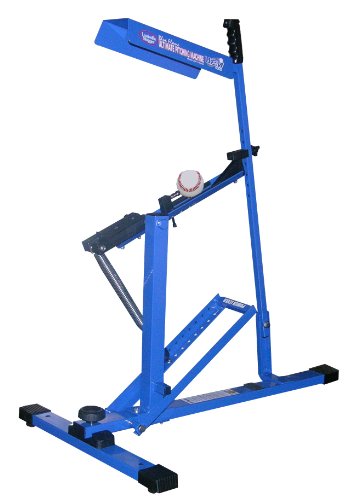
Best Manual Pitching Machine: Louisville Slugger Blue Flame
The Louisville Slugger Blue Flame is one of the most popular manual pitching machines for youth baseball, and for good reason. This spring-loaded machine doesn’t require electricity or batteries, so it’s extremely portable and reliable. Parents love it because it can be used anywhere — from the backyard to the practice field — and coaches appreciate the ability to consistently deliver strikes without wearing out their arms.
It’s versatile enough to throw baseballs, softballs, and even grounders or fly balls, making it a great all-around training tool. The machine is especially effective for kids ages 8–12 who need repetition at moderate speeds without the intimidation factor of a faster electric machine. It’s also affordable compared to most powered options, which makes it an excellent entry-level investment.
Best Safe Pitching Machine for Younger Players: JUGS Lite-Flite Machine
The JUGS Lite-Flite Machine (paid link) is designed with younger players in mind, offering a safer way to get plenty of reps without the fear of painful contact. Instead of using hard baseballs, it throws soft Lite-Flite balls that mimic the movement of real pitches, including fastballs, curves, and sliders. This allows kids to work on tracking and timing while staying confident in the batter’s box.
With adjustable speeds that simulate 15–85 mph, the Lite-Flite grows with your player, making it a machine that can be used for years. It’s especially popular with parents who want to encourage aggressive swings in kids who might otherwise shy away from live pitching. For younger athletes just starting out, this is one of the best and safest training tools available.

Best Pitching Machine on a Budget: Heater Sports BaseHit
For families looking to step up from manual options without spending too much, the Heater Sports BaseHit (paid link) is a great choice. This compact machine plugs into a standard outlet and throws real baseballs at speeds up to 45 mph, making it ideal for beginners. Its lightweight design makes it easy to transport, and it’s simple to set up in a backyard or at the field.
The BaseHit also pairs with optional batting cages and automatic ball feeders, which can turn a small space into a full training station. While it doesn’t offer the same velocity range as higher-end models, it provides plenty of consistency for young hitters developing their swing. Parents and coaches alike appreciate its balance of affordability, reliability, and performance.

Best Pitching Machine for Hand-Eye Coordination: JUGS Small-Ball Pitching Machine
The JUGS Small-Ball Pitching Machine (paid link) is designed to sharpen reaction time and precision at the plate. It throws undersized foam balls at speeds up to 75 mph (reaction-time equivalent), forcing players to really focus on making contact. Training with smaller balls helps hitters improve hand-eye coordination, which often translates into more consistent results with a regulation baseball.
This machine is especially useful for more advanced youth players who already have a solid swing and are ready to refine their timing. Coaches often use the Small-Ball Machine in team practices to challenge players and push their development forward. It’s not designed for absolute beginners, but for players looking to fine-tune their hitting skills, it’s one of the most effective tools available.

Best Pitching Machine for Teams and League Practices: JUGS BP1
The JUGS BP1 (paid link) is one of the most trusted pitching machines in youth baseball, built for both individual players and team practices. It features a digital speed adjustment dial that allows you to set pitches anywhere from 15 to 70 mph, which means it can accommodate players just starting out as well as more advanced hitters. It throws consistent strikes, so players get the repetition they need without coaches having to throw every pitch.
Beyond standard batting practice, the BP1 can also deliver fly balls and grounders, making it a versatile training tool for defense. Its durability and portability make it a favorite among coaches who need a machine they can count on for multiple seasons. While it is a larger investment than entry-level models, the JUGS BP1’s reliability and versatility make it one of the best options for teams and leagues that practice often.

Pitching Machine Tips for Coaches and Parents
- Start with lower speeds and gradually build up.
- Mix in grounders and fly balls for all-around development.
- Use safety balls (foam or dimpled) for younger players to reduce fear and encourage aggressive swings.
- Always use protective screens when feeding balls into the machine.
The best pitching machine for your youth baseball player or team depends on age, skill level, and budget. For backyard use, the Louisville Slugger Blue Flame is an affordable, reliable option. For safety and skill development, the JUGS Lite-Flite is a great choice for younger players. And for teams, the JUGS BP1 provides durability and versatility for years of use.
No matter which you choose, a pitching machine can help young players gain confidence, improve their swing, and fall in love with the game. Gear up with more equipment recommendations here: The Complete Youth Baseball Equipment Checklist.
Summer Baseball Training Guide: 10 Ways Kids Can Level Up This Offseason
For many young athletes, summer is baseball season. With longer days, warmer weather, and more…
Youth Baseball Cleats: How to Choose the Best Cleats for Young Players
If your child plays baseball, a good pair of youth baseball cleats can make a…
How to Break In a Youth Baseball Glove (Step-by-Step Guide)
One of the most exciting moments for a young baseball player is getting a brand-new…
What Position Should My Child Play in Youth Baseball?
It’s one of the most common questions parents ask: “Should my child pitch?”“Are they too…
How to Teach Kids to Handle Strikeouts and Slumps in Youth Baseball
Every young baseball player goes through it. The strikeout looking.The 0-for-3 game.The slump that feels…
Winter Baseball Drills to Do at Home
Winter doesn’t have to mean a break from baseball development. Even without access to a…