Teaching man-to-man defense to young athletes can feel intimidating, but at ages 6–8, the goal isn’t perfection — it’s habits, effort, and confidence. At YouthPlaybook, we believe great defense starts with simple concepts taught the right way.
If you’ve resisted the urge to coach zone defense and want to set your players up for success with a solid man-to-man foundation, you’re in the right spot.
This guide walks you through how to introduce man-to-man defense in a fun, age-appropriate, and effective way without overwhelming young players.
Start With the Why
Before you explain how to play defense, start with why it matters — using language kids understand. Young players respond best when they feel like they’re helping their team.
You might say something like: “Defense is how we help our teammates. When we play good defense, we make it harder for the other team to score, and that helps us win together.” At this age, buying into teamwork is far more important than understanding strategy.
Keep the Core Rule Simple: Find Your Person
For 6–8 year olds, man-to-man defense can be boiled down to one simple rule: find your person and stay with them. Resist the urge to introduce advanced terms or concepts. The fewer words you use, the better it will stick.
Instead of coaching ideas like denying passes or help-side positioning, focus on simple cues such as “stay with your person,” “arms out,” and “move your feet.” If players can consistently identify who they’re guarding and stay engaged, you’re building a strong foundation.
Teach the Defensive Stance Without Overcoaching
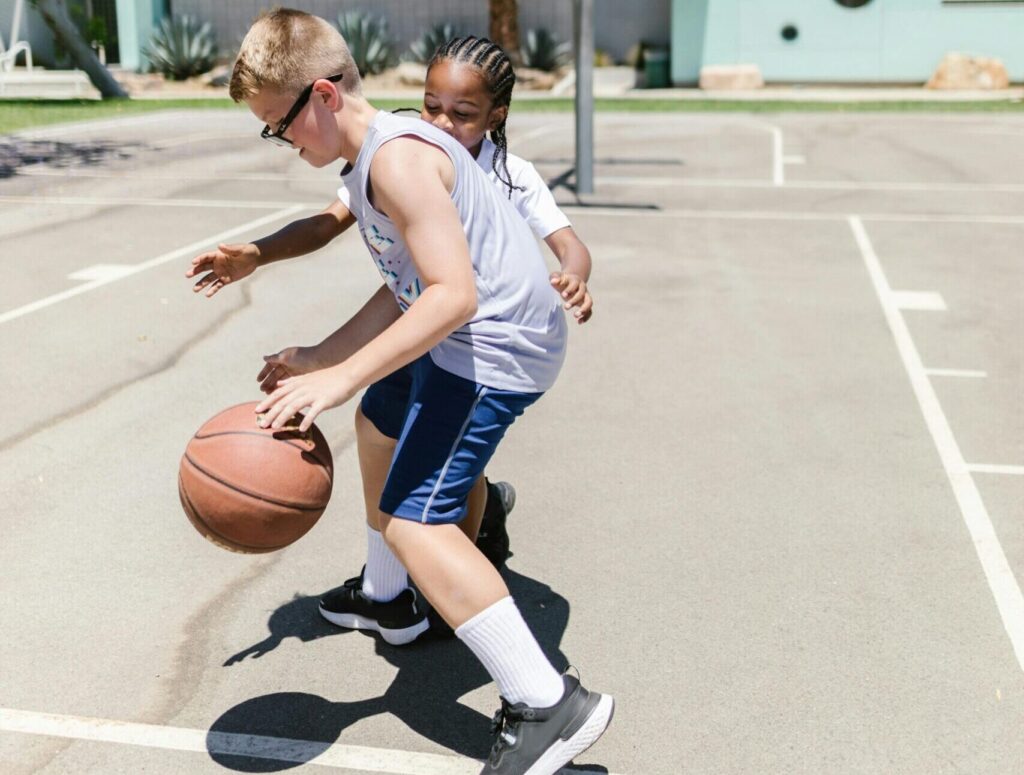
A good defensive stance matters, but it doesn’t need to look perfect at this age. The goal is to create a habit of being balanced, active, and ready to move.
Use short, memorable cues. Encourage players to keep their feet wide, bend their knees, hold their hands out like airplane wings, and keep their eyes on the offensive player’s chest. Spend just a minute or two reinforcing this each practice. Quick repetition over time is far more effective than long explanations.
Introduce the “You, Me, Ball” Concept
One of the simplest ways to teach defensive positioning is the classic “You, Me, Ball” idea. Breaking it into three clear pieces helps young players remember where they should be.
- You = your basket
- Me = the player you’re guarding
- Ball = where the ball is
Help players understand that they should try to stay between their person and the basket while still being able to see the ball. At ages 6–8, simply getting them into the right general area on the floor is a major success.
Teach Movement Before Steals
Young players love trying to steal the ball, which is natural — but before they can do that effectively, they need to learn how to move their feet. Emphasize sliding instead of crossing their feet, staying low, and using quick steps to stay in front of their person.
A phrase that works well with this age group is “feet before hands.” Repeating it often helps reduce lunging, reaching, and unnecessary fouls while reinforcing good defensive habits.
Make Defense Fun With Simple Games
Defense sticks best when it feels like play instead of work. Simple, game-like drills help kids stay engaged while learning important skills.
Pair players up for a shadow drill where one player moves side to side and the other mirrors them. Focus on effort and staying in front rather than perfect technique. You can also have players guard the coach as you dribble slowly, challenging them to stay in front for five seconds. Celebrate success loudly and often.
Another effective option is “Freeze Defense.” Match players up, let them play briefly, then call out “Freeze!” Check whether everyone is with their person. This builds awareness without pressure or embarrassment.
Praise Effort More Than Results
At ages 6–8, effort matters far more than outcomes. Make a point to praise hustling back on defense, staying with an assignment, bending knees, and trying again after getting beat.
Avoid focusing too heavily on steals or stops. When kids feel successful for trying hard, they’re more confident — and confident players give better effort.
Expect (and Accept) Mistakes
Mistakes are part of the learning process at this age. Players will lose their person, chase the ball, and forget assignments — sometimes all in the same possession.
Correct mistakes calmly and positively. A quick reminder like “Good effort — find your person” keeps players engaged without discouraging them. The goal is steady improvement over the course of the season, not perfection in a single game.
Final Thoughts: Build the Foundation for Youth Defense
Teaching man-to-man defense to 6–8 year olds is about building awareness, movement, effort, and confidence. If players learn how to identify their matchup, move their feet, and play hard, you’ve set them up for long-term success.
At YouthPlaybook, we believe the best coaches teach the game in a way kids love — and defense is no exception.
Play hard. Have fun. Build habits.
Summer Baseball Training Guide: 10 Ways Kids Can Level Up This Offseason
For many young athletes, summer is baseball season. With longer days, warmer weather, and more…

7 Lessons Young Athletes Can Learn From the World Cup
The FIFA World Cup is more than just a soccer tournament. Every four years, the…

Books for Sports Parents: Top-10 Must Reads for Parents of Athletes
Youth sports can be one of the most rewarding experiences for kids. They learn teamwork,…
Youth Baseball Cleats: How to Choose the Best Cleats for Young Players
If your child plays baseball, a good pair of youth baseball cleats can make a…
Flag Football Passing Plays: Simple Plays For Day One
Flag football is a great way to introduce kids to the passing game. Because there…

How to Break In a Youth Baseball Glove (Step-by-Step Guide)
One of the most exciting moments for a young baseball player is getting a brand-new…