Choosing the right bat can feel overwhelming for parents. Walk into any sporting goods store and you’ll see dozens of options in different lengths, weights, and materials. The truth is, the right baseball bat can make a big difference in your child’s comfort, confidence, and performance at the plate. A bat that fits correctly helps young players develop good habits, avoid unnecessary frustration, and stay excited about playing the game. Here’s a simple guide to help you cut through the noise and pick the baseball bat size that fits your young ballplayer.
Disclosure: This post contains affiliate links. As an Amazon Associate I earn from qualifying purchases. This means I may earn a small commission if you click and make a purchase, at no extra cost to you.
1. League Rules Come First
Before buying anything, check your league’s bat regulations. Different leagues (Little League, USSSA, Babe Ruth, etc.) have specific requirements around bat stamps, barrel size, and weight drop. The last thing you want is to buy a bat that your child can’t use in games.
Look closely for the official certification stamp (like “USA Baseball” or “USSSA”) printed on the barrel of the bat. Even if two bats look identical, one may be certified for your child’s league while another is not. Taking a few minutes to double-check rules will save both time and money down the road.
2. Length Matters – Baseball Bat Sizing Guide
The length of the bat impacts both swing mechanics and control. A bat that’s too long will feel heavy and slow your child down. Too short, and it limits reach across the strike zone, making it harder to cover pitches on the outer half of the plate.
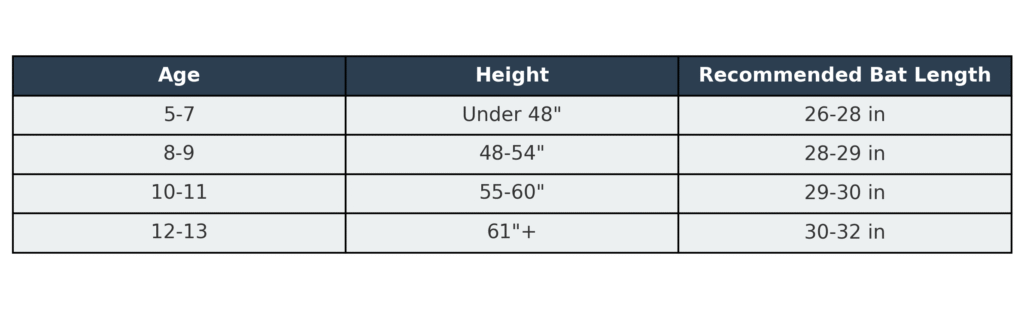
Quick check: Have your child stand up straight. Place the knob of the bat at the center of their chest and extend it outward. If the bat reaches their fingertips, the length is usually a good fit. You can also reference sizing charts like the one below for added guidance. The right length should allow your player to swing smoothly without overextending or dragging the barrel.
3. Weight and Drop Weight
Bat “drop” refers to the difference between length (in inches) and weight (in ounces). For example, a 29-inch bat that weighs 19 ounces is a -10 drop. A bigger drop means a lighter bat relative to its length.
- Younger/smaller players: Typically use bats with a higher drop (-10 to -13) for lighter swings and easier bat speed.
- Older/stronger players: Often move toward -8 or -5 drops for more power and durability, especially as they transition to larger fields.
Rule of thumb: Your child should be able to hold the bat straight out with one arm for about 10 seconds without struggling. If the bat feels like a workout just to hold, it’s too heavy. A correctly weighted bat helps your child swing faster and make consistent contact, which builds confidence over time.
4. Material: Alloy vs. Composite vs. Wood
Not all bats are made the same, and each material has its advantages:
- Alloy (metal) bats: Durable, affordable, and ready to use right away. They’re often less expensive and don’t require a break-in period, making them a great choice for recreational players and families on a budget.
- Composite bats: Lighter swing weight and bigger “sweet spot,” but usually more expensive and often require 150–200 hits to break in. They’re popular among competitive players who want maximum performance.
- Wood bats: Rarely used in youth leagues, but excellent for training. Hitting with wood encourages better mechanics, as the smaller sweet spot forces kids to focus on proper contact.
When deciding between alloy and composite, think about your child’s level of play and how often they’ll use the bat. A composite bat might not be necessary for a first-year player, but could be a worthy investment for an older player in a travel league.
5. Baseball Bat Sizing for Comfort and Confidence
Don’t underestimate how the bat feels in your child’s hands. Grip style, handle thickness, and overall balance can affect comfort and performance. Even two bats with the same weight and length can swing very differently depending on how the weight is distributed.
If possible, let your child take a few practice swings with different bats before making a purchase. Sometimes, simply holding the bat reveals whether it’s a good fit. A bat that feels comfortable promotes smoother swings, better control, and—most importantly—confidence at the plate. Confidence is often the difference between kids who step into the batter’s box nervous and those who step in ready to swing.
6. Budget Considerations
Youth bats can range from $50 to $350+. While the high-end models offer performance benefits, most players don’t need the most expensive option. Focus on fit first—length, weight, and league approval—before getting caught up in the latest bat technology.
That said, investing in a higher-quality bat may make sense for competitive players who practice often and need a durable piece of equipment. For beginners, a more affordable bat that meets league standards is perfectly fine. The key is finding the balance between performance, durability, and cost that fits your family’s needs.
Recommended Youth Baseball Bats on Amazon
If you’re ready to shop, here are some highly rated bats on Amazon that parents and players love. Be sure to double-check your league’s certification requirements before purchasing.
- Easton ADV 360 USA Youth Bat (-11)
Lightweight with a big sweet spot, perfect for younger players moving up in competition. Parents love that it helps kids make consistent contact without feeling heavy.
👉 Check price on Amazon (Paid Link) - Louisville Slugger Solo (-11) USA Baseball Bat
A balanced bat designed for speed and control, great for contact hitters who want to put the ball in play. The Solo’s one-piece alloy construction makes it both durable and responsive.
👉 See it on Amazon (Paid Link) - DeMarini CF (-10) USSSA Youth Bat
Known for its pop and performance, this composite bat is ideal for older or more advanced youth players. It has a smooth swing feel and is a favorite among travel ball players.
👉 View on Amazon (Paid Link) - Rawlings Raptor USA Youth Bat (-10)
Affordable and reliable, this is an excellent starter bat for beginners. The Raptor is lightweight, easy to swing, and a popular choice for first-time players.
👉 Shop on Amazon (Paid Link) - Marucci CAT X Composite (-10) USSSA Youth Bat
A premium bat with outstanding balance and feel, designed for players ready to invest in top performance. It’s widely praised for its consistency and ability to drive the ball with authority.
👉 Find it on Amazon (Paid Link)
Final Thoughts
Picking the right bat doesn’t have to be complicated. Start with league rules, then focus on length, weight, and comfort. A bat that fits properly will help your child develop good swing mechanics, build confidence, and have more fun on the field. Whether you go for an affordable option or invest in a top-tier bat, the most important thing is that your young ballplayer feels ready to step up to the plate and swing with confidence.