When shopping for a baseball glove, one of the biggest questions players and parents have is: what’s the difference between infield and outfield glove sizes? Choosing the right size glove and between infield vs. outfield glove isn’t just about comfort—it’s about giving players the best chance to succeed in their position. Infield vs outfield glove type and size – what’s the difference?
In this guide, we’ll break down the key differences between infield and outfield gloves, explain standard sizes by age, and help you choose the right fit for your player.
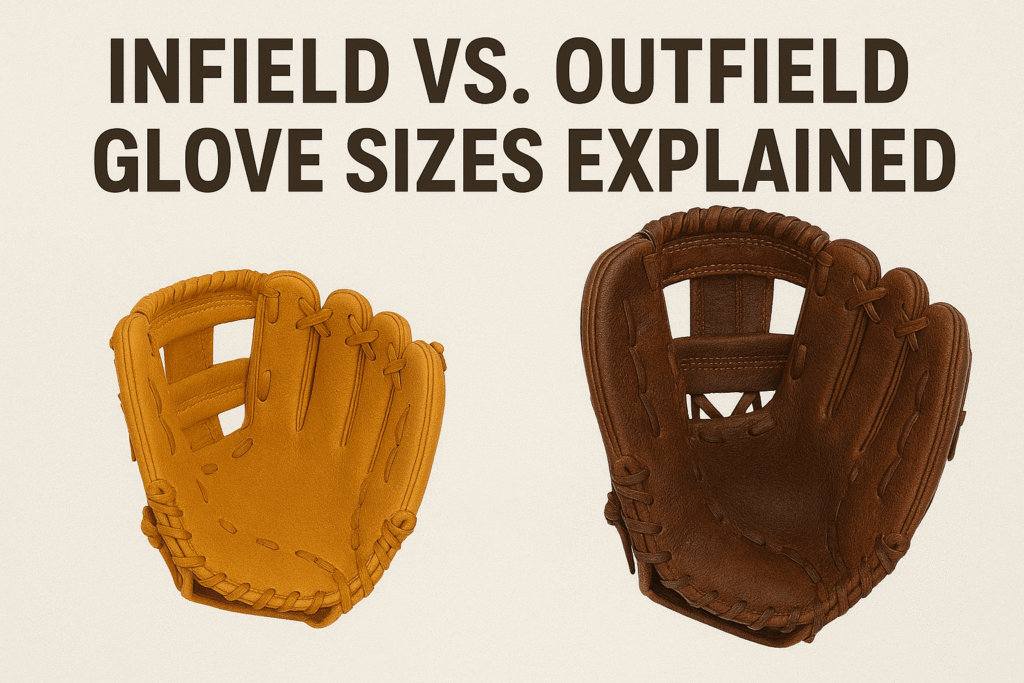
Infield vs Outfield Glove Key Differences
Infielders and outfielders face different challenges on the field, so their gloves are designed with unique features. Here’s how infield and outfield gloves differ:
- Infield Gloves
- Shorter (typically 10.5”–11.75”)
- Shallow pocket for quick transfers
- Great for ground balls and fast throws
- Outfield Gloves
- Longer (typically 12”–13”)
- Deeper pocket to catch fly balls
- Extra reach for tracking balls in the gaps
In short: infield gloves = quick and precise; outfield gloves = long and secure. Now, let’s look at choosing which glove type is right for your kid.
Choosing the Right Glove Type for Youth Players
For younger players, glove size often comes down to comfort and control.
- If your child plays multiple positions, a slightly larger glove (around 11.5”–12”) is a good compromise.
- Dedicated infielders should stick to the smaller end for quicker ball handling.
- Outfielders will benefit from the extra reach and deeper pocket.
If you’re shopping for a 7-year-old, the difference between an infield vs outfield glove isn’t a huge deal. But the older kids get, a specialized glove can be worth looking into.
Standard Glove Sizes by Position: Infield vs Outfield Glove
| Age Group | Infield Glove Size | Outfield Glove Size |
|---|---|---|
| 7–9 years | 10.5” – 11.25” | 11.25” – 11.75” |
| 10–12 years | 11” – 11.5” | 11.75” – 12.25” |
| 13+ years | 11.25” – 11.75” | 12” – 13” |
| Adult | 11.5” – 11.75” | 12” – 13” |
Note: Catcher’s mitts and first baseman’s gloves follow different sizing guidelines. For more info, check out What Size Baseball Glove Do You Need?
Infield and Outfield Gloves FAQ
Here are some common questions that parents and coaches ask when it comes to the difference between infield vs. outfield gloves:
What’s the difference between an infield and outfield glove?
Infield gloves are smaller (around 10.5”–11.75”) with a shallow pocket for quick throws, while outfield gloves are larger (12”–13”) with a deeper pocket to catch fly balls.
What size glove do most infielders use?
Most infielders use 11”–11.75”, depending on their age and position. Shortstops and third basemen often prefer the larger end for more reach, while second basemen may prefer the smaller size for faster transfers.
What size glove do most outfielders use?
Youth outfielders typically use 11.75”–12.25”, while older players and adults use 12”–13”. The longer length helps cover more ground and secure high fly balls.
Can a player use the same glove for infield and outfield?
Yes, especially at younger ages when versatility matters more than specialization. At higher levels, players usually switch to position-specific gloves for better performance.
Does glove size change with age?
Yes. Younger players use smaller gloves for control, while older players and adults move up to larger gloves that provide more reach and stability.
Are softball glove sizes different from baseball?
Yes. Softball gloves are typically longer and have a deeper pocket to handle the larger ball. A youth softball glove might be an inch bigger than its baseball counterpart.
How do I know if a glove fits properly?
The glove should feel snug but not tight. The player should be able to comfortably open and close it. If it feels heavy or stiff, the glove may be too large.
What’s the best glove size for a utility player?
For players who move between infield and outfield, a glove around 11.5”–12” works well as a balanced “all-position” size.
Infield & Outfield Gloves: Best Buys
There are countless gloves available on the web, so we’ve narrowed the selection down to a few for you to make it easy. Don’t forget to check out our baseball glove sizing guide to make sure you’re getting the right size for your kid.
Disclosure: This post contains affiliate links. As an Amazon Associate I earn from qualifying purchases. This means I may earn a small commission if you click and make a purchase, at no extra cost to you.
Infield Gloves
- Wilson A450 Infield Glove (Paid Link)
- Wilson A500 Infield Glove (Paid Link)
- Mizuno Prospect PowerClose Youth Baseball Glove Series (Paid Link)
Outfield Gloves
- Rawlings Sure Catch (Paid Link)
- Franklin Sports RTP Pro Baseball Glove – Adult + Youth Fielding Mitt (Paid Link)
- Rawlings | Select PRO LITE Youth Baseball Glove (Paid Link)
Final Thoughts
In conclusion, the main difference between infield and outfield glove sizes is how they’re built for the demands of the position. Infielders need a smaller glove for quick ball transfers, while outfielders benefit from a larger glove with more reach.
If you’re still unsure, check out our full guide: What Size Baseball Glove Do You Need?